

The Facility Manager's Guide to Preventing Downtime With Timely Automatic Door Repair
Automatic door systems are vital components of modern commercial and institutional infrastructure, facilitating efficient pedestrian flow and preserving building accessibility. From busy healthcare complexes to retail centers and transport hubs, automated entrances provide seamless accessibility while maintaining interior environmental control. However, continuous daily cycling subjects sensitive mechanical drives, structural hangers, and optical sensors to substantial wear. When these assemblies begin to degrade, prioritizing professional automatic door repair carried out by certified factory experts prevents sudden operational interruptions, safeguards building occupants, and protects the long-term utility of the building envelope.
Facility directors often oversee complex access portals where mechanical failures directly compromise site security, climate retention, and compliance with the Americans with Disabilities Act (ADA). Entrusting complex access machinery to general handymen often leads to recurring breakdowns and safety violations; only specialized entry technicians possess the tooling and training to service high-traffic operators safely. Incorporating routine evaluations alongside scheduled automatic door repair conducted by licensed technicians prevents catastrophic drive failures, extends machinery lifecycle, and upholds corporate professionalism from the moment a visitor steps up to the property line.
Recognizing the Operational Value of Automated Entrances
Enhancing Facility Accessibility and Traffic Flow
Automated entryways ensure barrier-free transit for individuals with physical disabilities, mobility carts, and heavy luggage, helping properties comply with stringent accessibility mandates. High-traffic settings like airport terminals and medical clinics depend on rapid cycle times to eliminate bottlenecks and minimize physical touchpoints. When entrance operators exhibit stuttering or latency, scheduling prompt automatic door repair by certified AAADM professionals restores fluid passage, preserves sanitary standards, and ensures compliance with ANSI/BHMA standards.
The operational convenience of touch-free access plays an essential role in preventing cross-contamination in sterile environments, laboratories, and modern culinary prep facilities. Hands-free entries remove the friction of heavy physical doors, allowing hospital beds, wheelchair users, and high volumes of foot traffic to move freely without physical contact. Having factory-trained specialists inspect and maintain these ingress pathways in peak mechanical condition protects public safety, reduces bodily fatigue for staff, and ensures an open, equitable physical environment across the entire property footprint.
Strengthening Building Security Frameworks
Commercial doors serve as the first line of defense within integrated perimeter security architectures. Modern systems link electronic strikes, mechanical latches, access badges, and central intrusion alarms into unified access portals. If mechanical components fail to latch securely or safety sensors hold panels open intermittently, security is compromised. Engaging certified technicians for comprehensive automatic door repair guarantees all locking hardware and sensor interlocks engage correctly, closing structural vulnerabilities and securing property assets.
Preserving Building Energy Efficiency
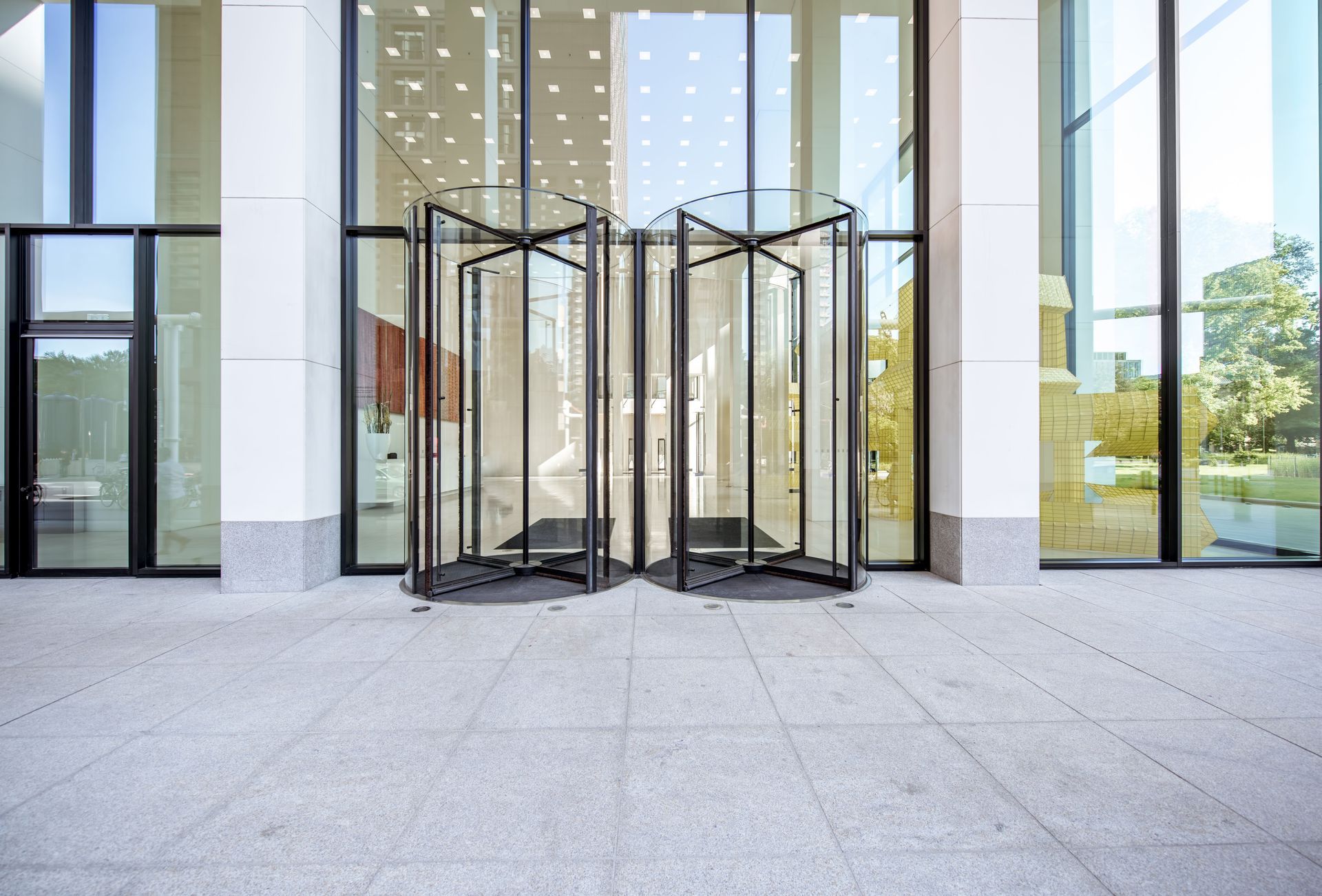
Automated sliding, swinging, and revolving entrances reduce thermal transmission by limiting the duration air infiltration occurs between indoor rooms and external weather. If misaligned rollers cause doors to drag or close slowly, conditioned air escapes continuously, inflating HVAC utility bills. Fast action through targeted automatic door repair performed by experienced entrance technicians restores weather-stripping seals, recalibrates closing speeds, and reduces total thermal loss across the entryway.
When doors cycle out of spec or stay open several seconds too long, massive volumes of exterior humidity and particulate-laden air infiltrate lobbies. This environmental air exchange overworks commercial air handlers, leading to premature air filter loading and excessive seasonal electricity usage. Correctly tuned door speeds and tight air curtains established by qualified ventilation and entrance specialists establish balanced indoor microclimates, significantly lowering facility carbon footprints and cutting long-term operational overhead.
Maintaining Visual Appeal and Brand Image
The primary entryway establishes the immediate perception of a commercial enterprise, conveying cleanliness, modern amenities, and operational excellence. Squeaking hardware, scuffed track profiles, or out-of-order signage project an impression of deferred maintenance and administrative neglect. Prompt attention through specialized automatic door repair completed by industry professionals preserves architectural aesthetics, elevates customer confidence, and protects brand reputation.
Diagnosing Mechanical and Electronic Malfunctions
Identifying Motion Delays and Cycling Lags
Sluggish response during opening cycles or failure to complete the full closing sweep indicates underlying mechanical resistance, worn drive belts, or degraded motor armatures. Incomplete motion cycles create safety hazards for pedestrians navigating the doorway and violate strict ADA transit times. Arranging rapid automatic door repair allows skilled technicians to inspect motor controllers, balance counterweights, and restore fluid panel motion before drive units burn out completely.
Investigating Unusual Operating Sounds
Grinding, rattling, or clicking sounds during door operation provide clear warnings of bearing failure, dry guide tracks, or loose drive chains. Overlooking unusual acoustic patterns allows mechanical friction to score metal tracks and shear mounting fasteners. Utilizing qualified technicians for immediate automatic door repair pinpoints friction points, applies industrial lubricants, and replaces failing hardware before full structural jamming occurs.
Resolving Intermittent Sensor Errors
Optical, infrared, and microwave presence sensors serve as the core intelligence of automated entrances, preventing closing panels from striking pedestrians. Sensor lenses accumulate grime, become knocked out of alignment, or suffer circuitry failures that cause doors to cycle erratically without traffic present. Regular testing combined with specialized automatic door repair handled by certified instrumentation experts ensures optical fields remain calibrated, free of dead zones, and fully compliant with industrial safety thresholds.
Correcting Visible Structural Degradation
Impacts from luggage carts, delivery hand-trucks, and wind gusts frequently bend floor tracks, dent framing rails, and shatter bottom guides. Operating automatic doors across warped structural tracks strains the motor drive and prematurely wears suspension wheels. Implementing timely automatic door repair with experienced structural technicians realigns warped framing members, replaces cracked glass lites, and installs reinforced thresholds to keep doors tracking cleanly.
Overhead weather elements also take a heavy toll on exposed aluminum extrusions, pivots, and bottom brushes. Corrosion and grit accumulation within the floor guide tracks create severe drag that burns out compact gearboxes. Professional glazing and entrance mechanics systematically monitor physical frame alignment, remove fine debris, and repair damaged floor sweeps to keep panels moving smoothly along their intended path without binding against rough structural sills.
Implementing Proactive Maintenance Protocols
Establishing Structured Inspection Timetables
Preventative care relies on systematic walk-throughs conducted by on-site maintenance staff, reinforced by rigorous semi-annual audits performed by certified specialists. Daily checklists should verify sensor detection boundaries, cycle timing, manual emergency breakout functions, and latching clearances. Documenting recurring mechanical faults speeds up professional automatic door repair, allowing authorized technicians to source OEM components and minimize system downtime.
Adhering to Established Industry Safety Standards
Regulatory authorities mandate that power-operated pedestrian door systems adhere to clear operational forces, opening speeds, and safety zone configurations as governed by industry codes. According to ANSI/BHMA A156.19, manual opening and operational forces must not exceed 30 lbf (133 N) to set the door in motion and 15 lbf (67 N) to fully open or release the latch. Failing to comply can expose property owners to severe legal liability should a pedestrian collision or access barrier occur. Periodic audits and calibrated automatic door repair performed by certified inspectors keep door kinetic energy, manual opening forces, and time delays within strict regulatory parameters.
Ensuring compliance requires certified technicians to use specialized kinetic force gauges and calibrated digital stopwatches to evaluate door opening torque and closing momentum. If opening speeds are adjusted too fast in an attempt to handle rush-hour foot traffic, the kinetic energy of swinging glass panels can quickly surpass legal safety thresholds. Certified service partners conduct precision adjustments that keep door speed, hold-open intervals, and breakout release forces aligned with national life-safety mandates.
Automated entryways are essential infrastructural assets that demand ongoing technical care, routine safety evaluations, and precise mechanical adjustments. Waiting for an entrance to fail before scheduling service disrupts pedestrian traffic, creates security vulnerabilities, and drives up repair expenses. By partnering with certified door specialists for timely automatic door repair, facility managers can optimize traffic flow, protect building occupants, and ensure flawless daily performance across every facility entrance. If you find yourself needing automatic door repair, contact CAC Door Systems Co.





Share On: